
Psychological Safety: The Foundation of Agile Mindset in Teams
Ever been in a retrospective where nobody really says what they think? The board fills up with safe, neutral comments. A few people speak, most stay quiet. Everyone seems to agree, but nothing really changes. On the surface, the process is working. The meeting happens, the format is followed, actions might even be defined.
But something is missing. And that something is psychological safety.
When Agile Looks Right but Feels Wrong
Many teams adopt agile frameworks and follow them closely. They run stand-ups, plan sprints, and hold retrospectives. From the outside, everything looks as it should. Yet inside the team, the dynamic feels different. People hesitate before speaking. Feedback is softened or avoided. Disagreements are rarely expressed openly. Problems are mentioned briefly, then quickly left behind. In these environments, teams are not lacking structure. They are lacking safety. Because without psychological safety, agile becomes a routine - not a learning system.
What Psychological Safety Really Means
Psychological safety is often misunderstood. It is not about making everyone comfortable. It is not about avoiding conflict or always being nice. And it certainly does not mean lowering expectations. Instead, psychological safety is about creating an environment where people feel able to speak up without fear of negative consequences. This concept was extensively researched by Amy Edmondson, who defined it as a shared belief that the team is safe for interpersonal risk-taking.
It means being able to say:
“I don’t understand this.”
“I think we might be missing something.”
“I made a mistake.”
And knowing that these statements will lead to discussion - not judgment. Safety does not remove challenge. It makes challenge possible.
What It Looks Like in Real Teams
In teams with strong psychological safety, you can observe a different kind of interaction. People ask questions freely, even when they are unsure. Feedback is given directly, but with respect. Mistakes are not hidden - they are explored. Silence is not ignored; it is noticed and addressed. There is a sense that everyone’s input matters, not just the most confident voices. Conversations go a bit deeper, even when that feels uncomfortable.
These teams are not perfect. They still face challenges, disagreements, and setbacks. But they are able to work through them openly. And that openness is what enables improvement.
What Happens When Safety Is Missing
The absence of psychological safety is often subtle, but the impact is significant. It shows up as silence in retrospectives, where only a few voices dominate. It appears as quick agreement, where people nod along without fully aligning. It surfaces in feedback that is vague or avoided altogether.
Over time, teams may stop raising concerns. Problems remain unspoken. Learning slows down. In more extreme cases, mistakes lead to blame rather than reflection. People focus on protecting themselves instead of improving the system.
Research like Project Aristotle highlighted that psychological safety was the most important factor in high-performing teams- more than individual talent or experience. From the outside, everything may still look structured and efficient. But underneath, growth has stalled.
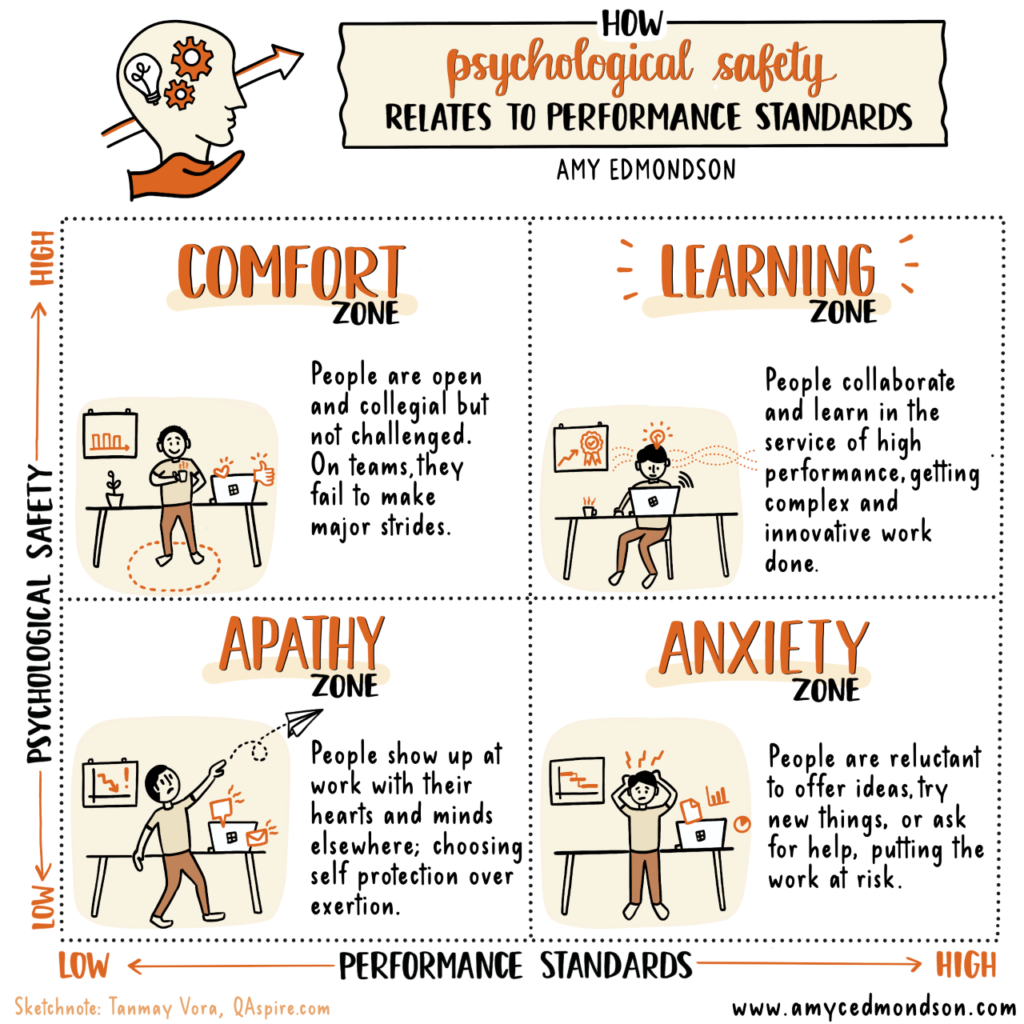
Why Psychological Safety Is Essential for Agile Mindset
Agile mindset is built on learning, feedback, and continuous improvement. But none of these can exist without psychological safety.
If people do not feel safe, they will not give honest feedback.
If they cannot admit mistakes, they cannot learn from them.
If they avoid disagreement, they miss better solutions.
In that sense, psychological safety is not just a “nice to have.” It is the foundation that everything else depends on. Without it, agile practices become mechanical. With it, they become meaningful.
This aligns strongly with principles described in The Fearless Organization, where psychological safety is directly linked to learning, innovation, and performance in modern organizations.
Small Shifts That Make a Big Difference
Building psychological safety does not require major interventions. It grows through consistent, everyday behaviours. It can start with how leaders and facilitators respond in key moments. When someone raises a concern, is it explored or dismissed? When a mistake happens, is the reaction calm or critical?
Simple actions can have a strong impact. Asking quieter team members for their perspective signals that their voice matters. Admitting “I don’t know” as a leader creates space for others to do the same. Responding to problems with curiosity instead of blame shifts the tone of the conversation. Over time, these small signals accumulate. They shape how safe people feel and how willing they are to engage.
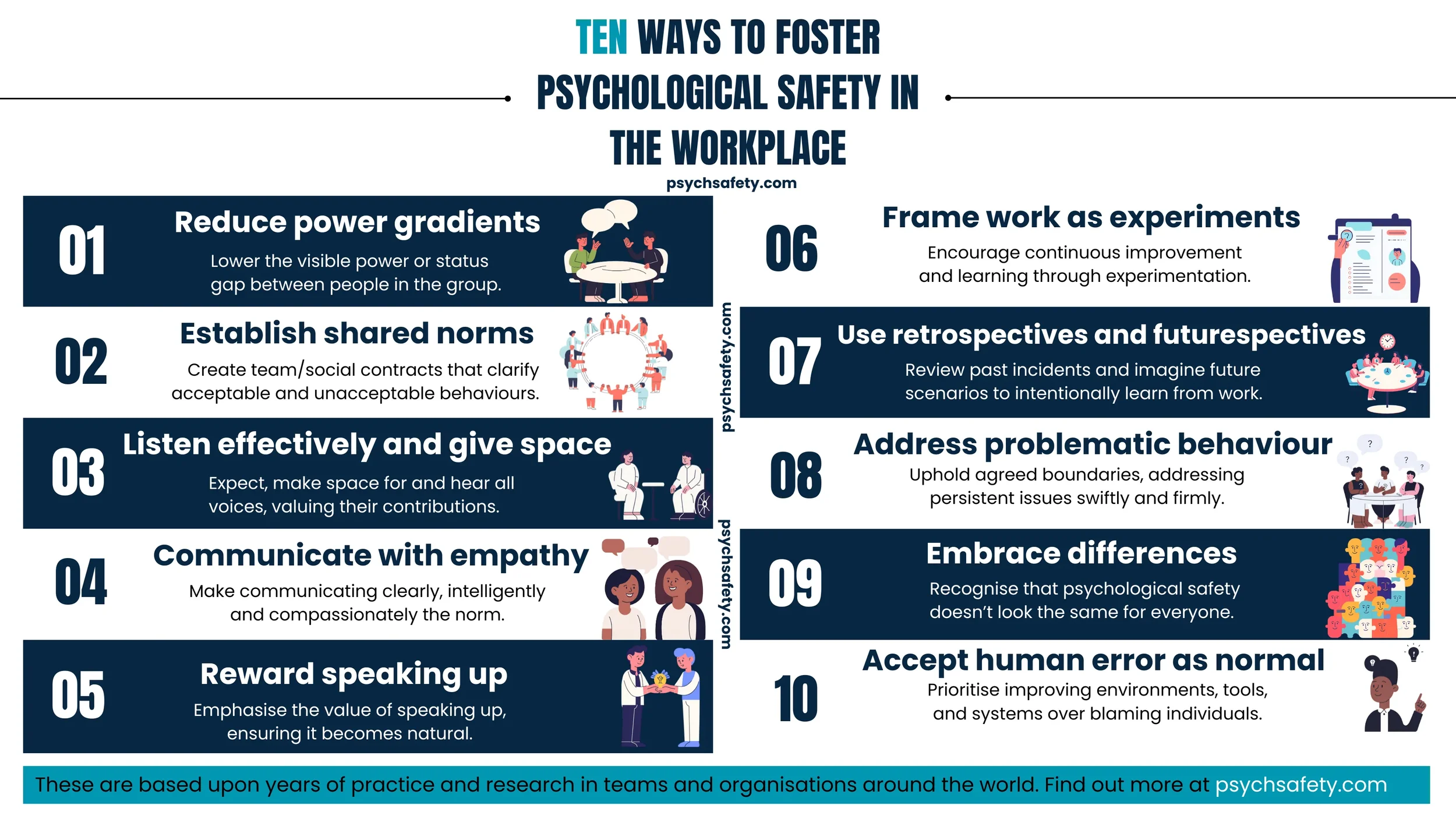
Top Ten ways to Build Psychological Safety, psychsafety.com
Final Thought
Psychological safety is not something teams declare. It is something people feel. And that feeling determines how they behave, whether they speak up, challenge ideas, admit mistakes, or stay silent.
In agile teams, the difference between routine and real improvement often comes down to this. Not the framework. Not the process. But whether people feel safe enough to learn together. Because without safety, there is no openness. And without openness, there is no growth.
